A SOULFLO Therapy Guide
Understanding EMDR: What It Is, What to Expect, and Who It's For
Curated by SOULFLO Therapy — to ease the struggle of finding the right fit.
This content is for educational purposes only and is not a substitute for therapy, diagnosis, or treatment. Reading this does not establish a client-therapist relationship. If any of this resonates, we encourage you to reach out for a consultation to discuss your specific situation.
What EMDR Is
What EMDR actually does
Trauma and distressing memories can get "stuck" in the nervous system instead of processing normally — the brain's fight, flight, or freeze response holds onto them, keeping the memory as present as today.
EMDR uses bilateral stimulation — eye movements, tapping, or sounds — while you briefly focus on a distressing memory. This appears to help the brain reprocess it, so the memory moves from "stuck" to "resolved" — remembered, but no longer activating.
EMDR is recognized as an effective trauma treatment by major health and mental health organizations worldwide.
Stuck
The memory feels like it's still happening
Your body reacts as if the event is happening right now — the alarm stays on.
Resolved
The memory is just a memory
You remember what happened, but your body knows it's over — the alarm turns off.
Watch: EMDRIA's Official Introduction
Recognized as effective by
How It's Different
How EMDR is different from talk therapy
EMDR does not require talking in detail about the distressing event or doing homework between sessions. The brain does the processing while you stay present and in control.
It can often be completed in fewer sessions than other approaches, and is available in-person or via telehealth with a trained clinician.
What to Expect
The 8 phases of EMDR
Tap each phase to see what happens and why.
The therapist gathers your history and identifies which memories or experiences to target.
You have full control to pause or stop at any point — the process only goes where you're ready for it to go.
Who It Can Help
Who EMDR can help
Single-incident trauma and complex, repeated trauma — helping the brain file what still feels like it's happening into the past.
Targets the memories and beliefs driving the alarm, so the body stops reacting to a threat that isn't here anymore.
According to EMDRIA, EMDR can be effective for depression, especially when tied to unprocessed loss, grief, or negative core beliefs like "I'm not enough."
EMDRIA-published research documents EMDR's effectiveness in reducing both pain intensity and the emotional distress associated with chronic pain conditions.
Eases the charge of a loss that won't settle — without needing to find the "right" words for it.
When sleep is disrupted by an overactive system, processing the underlying material can help the nervous system stand down at night.
Addresses the painful experiences and cravings that often sit beneath the behavior, as part of a broader recovery plan.
Works on the body image beliefs and early experiences that fuel the pattern, alongside nutrition and medical care.
Helps the body release what it couldn't process in the moment, at a pace that keeps you in control of the work.
The Simple Science
What the brain is doing

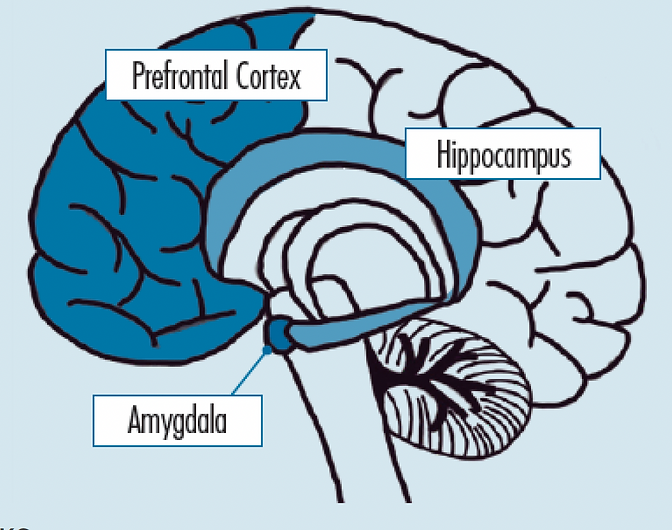
Prefrontal Cortex
Normally helps you reason through "is this actually dangerous right now?" Trauma can weaken its signal.
Hippocampus
Handles memory and safety learning. Under chronic stress it can shrink, weakening its ability to calm the amygdala.
Amygdala
The alarm system. It stays overactive after trauma, keeping the body on high alert even when the danger has passed.
EMDR helps restore communication between these three areas so the threat response resolves and the memory becomes just a memory.
Meet Your Therapist
A therapist who fits what you're exploring


Nan Wang, APCC/AMFT
Registered Associate Professional Clinical Counselor & Registered Associate Marriage and Family Therapist
EMDR-trained therapist helping thoughtful adults and teens with anxiety, depression, and patterns they can't think their way out of.


Mai Eguchi, AMFT
Registered Associate Marriage and Family Therapist
EMDR-trained with a structural dissociation lens, attuned to complex trauma and deeply sensitive clients.


Brittney Raymond, AMFT
Registered Associate Marriage and Family Therapist
EMDR-trained, working with high-achieving millennials navigating anxiety, burnout, and past trauma.


Nancy Phung-Smith, LMFT
Founder & Clinical Supervisor
EMDRIA Approved Consultant offering EMDR Intensives for focused, deeper reprocessing of complex trauma.
Frequently Asked Questions
No. You stay fully awake and in control the entire time. EMDR uses bilateral stimulation — like eye movements or tapping — while you focus on a memory, but it's not hypnosis. You're aware of everything happening and can stop at any point.
Educational Disclaimer
This page is for educational purposes only and is not a substitute for professional diagnosis or treatment. Please consult a licensed clinician about your specific situation.
Curious whether EMDR is right for you?
Nancy Phung-Smith, LMFT, is an EMDRIA Approved Consultant. SOULFLO specializes in trauma-focused intensives using EMDR, IFS, and Brainspotting for high-functioning adults with complex trauma — therapy designed around how your brain actually works.